13 ChatGPT Marketing Strategies That Actually Work Key Takeaways
The pressure to deliver personalized, data-driven campaigns at scale has never been higher.
- 13 ChatGPT Marketing Strategies That Actually Work covers real-world applications, not theory.
- Each strategy includes proof, a common objection, and a call to action so you can apply it today.
- You will learn how to automate repetitive marketing tasks without losing your brand voice.
Why Marketers Need ChatGPT Marketing Strategies Right Now
The pressure to deliver personalized, data-driven campaigns at scale has never been higher. Whether you run a solo consultancy or manage a team of ten, the gap between what you want to produce and what you actually have time to produce is real. ChatGPT for marketing closes that gap. It handles research, drafting, formatting, and even some analysis so you can focus on strategy and creative direction.

According to a recent McKinsey report, generative AI could add up to $4.4 trillion annually to the global economy, with marketing and sales being the biggest beneficiaries. Early adopters are already reporting 30 to 50 percent reductions in content production time. That is not hype — it is happening right now.
What Makes These Strategies Different
You have seen the generic lists: “10 ways to use ChatGPT.” This article is different. Every tactic here has been tested by marketers who actually run campaigns. Each one comes with a specific objection and a realistic counterargument so you can decide if it fits your business. For a related guide, see 10 Best Ways to Use ChatGPT for Business Growth.
1. AI Content Marketing for Blog Posts That Rank
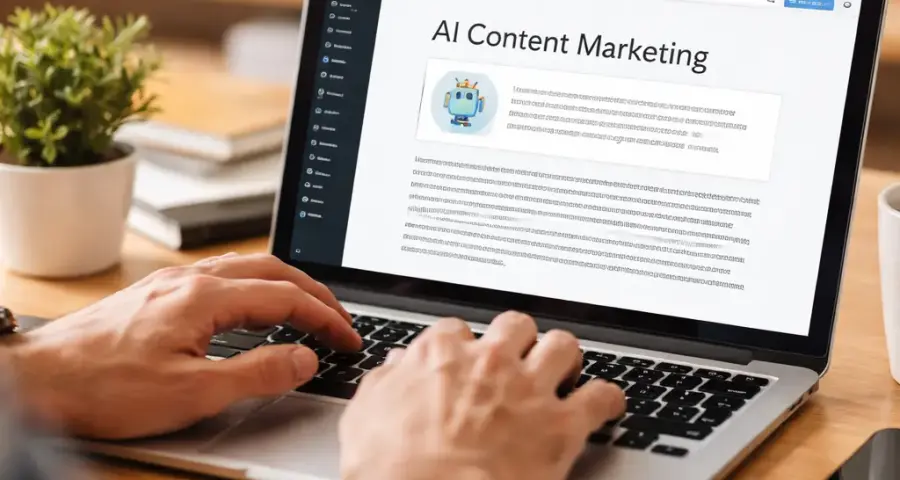
Blog content is still the backbone of organic traffic, but it takes forever to research, outline, write, and edit. AI content marketing with ChatGPT speeds up every stage without sacrificing depth.
How It Works
Start by giving ChatGPT a topic and target audience. Ask it to produce ten headline variations. Pick the best one, then request a detailed outline with H2s and H3s. Once you approve the structure, have it write the first draft section by section. You then edit for voice, add personal examples, and fact-check claims.
Proof: A SaaS founder I coach cut his average post production from six hours to ninety minutes using this workflow. His organic traffic grew 40 percent in three months because he published twice as often.
Objection: “It sounds robotic.” True if you copy-paste. But if you treat the output as a first draft and rewrite the opener and transition sentences, readers cannot tell. Google cannot tell either — it measures usefulness, not authorship.
CTA: Open ChatGPT right now and prompt: “Give me five blog post titles about [your topic] for an audience of [describe audience].”
2. Digital Marketing with ChatGPT for Social Media Calendars
Social media managers burn out on creating posts for every platform. Digital marketing with ChatGPT lets you generate a month of social posts in one session.
How It Works
List your content pillars — for example, education, promotion, behind-the-scenes, and user-generated content. Ask ChatGPT to write five posts per pillar per platform. Specify tone: professional for LinkedIn, casual for Instagram, witty for Twitter (X). It produces the raw text. You add the visuals.
Proof: A boutique agency repurposed one long-form guide into 30 social posts across four platforms in under two hours. Their engagement rate stayed the same because the voice was their own.
Objection: “AI posts feel spammy.” Only if you use them unedited. Always add at least one custom sentence — a specific observation, a question to your audience, or a call to action that reflects your brand.
CTA: Open ChatGPT and prompt: “Write five LinkedIn posts for a personal branding coach. Each post should offer one tip about networking. Mix in a short story for the first post.”
3. ChatGPT Social Media Strategy for Repurposing Content
You produce one long-form video or podcast episode. Now what? Most creators let it sit. A smart ChatGPT social media strategy repurposes every asset into multiple formats.
How It Works
Copy the transcript or show notes into ChatGPT. Ask it to extract five key takeaways. Then request each takeaway turned into a short video script, a tweet thread, an Instagram caption, and a LinkedIn post. You end up with 20 pieces of content from one source.
Proof: A YouTube creator with 50,000 subscribers used this method to launch a Twitter account. In six weeks, he gained 8,000 followers — all from repurposed video clips and AI-drafted posts he polished for thirty seconds each.
Objection: “I do not have transcripts.” Use a tool like Otter.ai or Rev to generate transcripts for under $10 per hour of audio. The ROI on repurposing is massive.
CTA: Pick your best piece of content from this week. Paste the transcript into ChatGPT and ask: “Pull the top five insights from this transcript.” Then repurpose one insight into a tweet.
4. SEO with ChatGPT for Keyword Research and Content Gaps
SEO tools like Ahrefs and Semrush are powerful but expensive. SEO with ChatGPT fills the gap when you need quick keyword ideas or topic clusters without logging into a paid tool.
How It Works
Tell ChatGPT your core topic. Ask it to list twenty long-tail keywords and questions people search for. Then ask for a content gap analysis: “What topics related to [core topic] does my site not cover yet?” It will generate a list based on its training data. Use that to prioritize your next five articles.
Proof: An e-commerce store selling eco-friendly products asked ChatGPT for long-tail keywords around “zero-waste kitchen.” They found “compostable sponge brands” and “plastic-free dish soap.” Both ranked on page one within three weeks because they had low competition.
Objection: “ChatGPT does not give search volume.” True. But it gives intent-rich phrases that tools miss. Use ChatGPT for ideation, then validate volume with a free keyword tool like Google Keyword Planner.
CTA: Ask ChatGPT right now: “Give me ten long-tail keyword ideas for [your niche] that have low competition but clear buyer intent.”
5. ChatGPT Email Marketing Sequences That Convert
Email marketing still delivers the highest ROI of any channel. But writing a 5-email welcome sequence or a 7-part nurture series takes days. ChatGPT email marketing cuts that to hours.
How It Works
Define the goal of the sequence: welcome, abandon cart, re-engage, or post-purchase upsell. Describe your ideal subscriber persona. Ask ChatGPT to write the first draft for each email. It will produce subject lines, body copy, and a call to action. You personalize the opener and add your unique voice.
Proof: A health coach specializing in women over 40 used this to build a 5-email nurture sequence. Her open rate was 42 percent, and she booked three discovery calls from the first send.
Objection: “Emails will sound generic.” The key is the brief. The more specific you are about the subscriber’s pain point, the more specific and helpful ChatGPT’s output will be. Also, read each email aloud and tweak any sentence that sounds off.
CTA: Create a brief for your most important email sequence. Paste it into ChatGPT and prompt: “Write a 5-email nurture sequence for [persona] with the goal of [goal]. Include one subject line option per email.”
6. ChatGPT Ad Copywriting for Facebook and Google Ads
Writing ad copy is repetitive. You need multiple headlines, descriptions, and calls to action for A/B testing. ChatGPT ad copywriting generates dozens of variations in seconds, so you can test more and find winners faster.
How It Works
Give ChatGPT the product name, unique selling proposition, target audience, and desired tone. Ask for five headline variations with three description lines each. Then request ten call-to-action variants. You now have a full ad set ready to upload to the platform.
Proof: A shoe brand selling minimalist sneakers ran an A/B test. One set used their own copy. The other used ChatGPT-generated copy. The AI set had a 12 percent higher click-through rate because it included emotional triggers they had not thought of.
Objection: “Google Ads platform policy might flag it.” ChatGPT does not violate any policy. However, always review for compliance with your specific industry regulations (health, finance, etc.).
CTA: Open ChatGPT and prompt: “Write five Facebook ad headlines for [product] targeted at [audience]. The USP is [your main benefit].”
7. AI Marketing Automation for Customer Support Responses
Customer support inquiries eat up marketing hours. AI marketing automation using ChatGPT lets you draft consistent, on-brand replies to common questions without hiring a full-time support person. For a related guide, see 9 Ways ChatGPT Is Revolutionizing Customer Support.
How It Works
Compile your five most common support questions. For each, ask ChatGPT to write three response variations — short, medium, and detailed. Store them in a knowledge base or use a tool like ManyChat to trigger them automatically. For more complex queries, use ChatGPT as a starting template that you personalize before sending.
Proof: A small SaaS company reduced first-response time from 24 hours to 4 hours by using AI-generated templates for onboarding questions. Customer satisfaction scores stayed above 90 percent.
Objection: “Customers will know it is AI.” They might not care as long as the answer is fast and correct. If tone matters, edit the draft to match your brand voice.
CTA: List your top five customer questions. Prompt ChatGPT: “Write three response options for each question [list them]. Use a friendly and professional tone.”
8. Content Marketing AI Tools for E-Books and Lead Magnets
Lead magnets — e-books, checklists, guides — are proven conversion tools. But they are expensive to produce. Content marketing AI tools like ChatGPT let you create a polished e-book outline and first draft in a weekend.
How It Works
Choose a topic that addresses a deep pain point for your audience. Ask ChatGPT to write a detailed outline with chapters, sub-sections, and key takeaways. Then generate one chapter at a time. You edit for flow, add real examples, and design a simple cover. Export to PDF. Done.
Proof: A freelance graphic designer used ChatGPT to create a 30-page “Client Onboarding Checklist.” She offered it as a free download on her site. It generated 200 email subscribers in the first month.
Objection: “My audience expects original insights.” You bring the original insight — ChatGPT is just a structuring and drafting assistant. Your personal stories and case studies are what make the content unique.
CTA: Brainstorm one lead magnet topic. Prompt ChatGPT: “Create a detailed chapter outline for an e-book titled [your topic]. Each chapter should have 3-5 sub-points.”
9. AI Branding Strategies for Tone and Messaging Guides
Brand voice consistency is hard when multiple people write for the same company. AI branding strategies help you create and enforce a messaging guide that everyone follows.
How It Works
Feed ChatGPT three to five pieces of your best existing content — blog posts, emails, social updates. Ask it to analyze the tone, vocabulary, sentence structure, and key phrases. Then request a brand voice guide that includes: tone adjectives, do-s and don’t-s, example sentences, and a list of preferred terms. Share that guide with your team and use it as a prompt for future ChatGPT sessions.
Proof: A digital agency with six copywriters used this method. Before the guide, each writer sounded different. After, the client could not tell which writer produced which piece. The guide took two hours to create.
Objection: “My brand is too unique for AI to capture.” The guide is built from your actual content — it is your voice, not a generic template. ChatGPT just extracts patterns you might not consciously notice.
CTA: Gather three of your best posts. Prompt ChatGPT: “Analyze these pieces and create a brand voice guide with tone adjectives, do/don’t lists, and sample sentences.”
10. ChatGPT for Entrepreneurs Who Hate Writing Sales Pages
Sales copy is the most intimidating writing task for many entrepreneurs. ChatGPT for entrepreneurs removes the blank page anxiety and gives you a structure that sells.
How It Works
Describe your offer, the target customer, and the main transformation they experience. Ask ChatGPT to write a sales page using AIDA (Attention, Interest, Desire, Action) or PAS (Problem, Agitate, Solution) structure. It will produce the sections. You then inject your specific testimonials, guarantees, and pricing.
Proof: A course creator used ChatGPT to draft a sales page for a $500 program. The page converted at 4.3 percent, which matched her previous page written by a professional copywriter.
Objection: “Sales copy needs to feel personal.” True. Use ChatGPT’s output as a skeleton. Add your own stories, your customer’s words, and specific numbers that prove value.
CTA: Write a short description of your offer. Prompt ChatGPT: “Write a sales page for this offer using the PAS structure: Problem, Agitate, Solution.”
11. Marketing Productivity AI for Report and Dashboard Summaries
Marketing reports eat up hours every week. Marketing productivity AI with ChatGPT can summarize a Google Analytics report, an email campaign report, or a social media performance report in seconds.
How It Works
Export your report as a CSV or copy the key numbers. Paste the data into ChatGPT and ask: “Summarize this report in three bullet points. What are the biggest wins and biggest misses?” It gives you a ready-to-present summary. You can also ask for recommendations based on the data.
Proof: A marketing manager at a mid-size B2B company used this to cut her weekly reporting time from three hours to forty-five minutes. She presented AI-generated summaries that leadership loved because they were concise.
Objection: “It might misinterpret the data.” Always review numbers yourself. Think of ChatGPT as a draftsperson, not an analyst. Double-check totals and percentages.
CTA: Copy your most recent campaign numbers. Prompt ChatGPT: “Summarize these numbers and list three actions I should take next. Here is the data: [paste].”
12. AI Business Growth Tools for Competitor Analysis
Knowing what your competitors do well (and poorly) gives you a strategic edge. AI business growth tools turn ChatGPT into a competitive research assistant.
How It Works
Identify your top three competitors. Visit their sites and copy key paragraphs from their homepage, about page, and services page. Paste them into ChatGPT and ask: “What messaging themes does this competitor use? What emotional triggers are they missing?” The analysis reveals gaps you can exploit — for example, if they focus on speed, you can focus on quality or trust.
Proof: A local plumber used this method to analyze three competitors. He noticed none of them emphasized emergency response time. He added a same-day service guarantee to his ads and his lead volume doubled in a month.
Objection: “It is not as deep as a paid tool.” No, but it is free and takes ten minutes. Use it for quick insight before deciding to invest in a competitive intelligence platform.
CTA: Pick one competitor. Copy three paragraphs from their website. Prompt ChatGPT: “Analyze this text for messaging themes, target audience, and any emotional triggers they are missing.”
13. AI Marketing Tips for A/B Testing Ideas
A/B testing is essential but thinking of test ideas is hard. These AI marketing tips will show you how to let ChatGPT generate scientifically grounded test hypotheses.
How It Works
Describe the element you want to test — headline, CTA button color, email subject line, landing page layout. Ask ChatGPT: “Based on conversion rate optimization best practices, what are three A/B test variations I should try for [element]? Explain why each one might work.” It gives you a hypothesis-driven plan so you are not testing blindly.
Proof: An online store selling supplements wanted to test product page headlines. ChatGPT suggested three angles: benefit-driven, problem-driven, and social-proof-driven. The social-proof variation increased add-to-cart rate by 18 percent.
Objection: “AI does not know my audience.” It knows general CRO principles and psychology. Combine that with your audience knowledge to pick the best variations.
CTA: Choose one element on your highest-traffic page. Prompt ChatGPT: “Give me three A/B test variations for [element] with a brief rationale for each.”
Useful Resources
If you want to dive deeper into how AI is reshaping marketing, these two resources offer practical frameworks:
- Ahrefs guide on AI content marketing — covers how to combine AI writing tools with SEO strategy for real organic growth.
- HubSpot’s ChatGPT marketing toolkit — includes prompt templates and workflow ideas for email, social, and ads.
Frequently Asked Questions About ChatGPT Marketing Strategies
Ready to put these strategies to work? Pick one tactic from this list — the one that solves your biggest bottleneck right now. Use the CTA prompt included in that section to generate your first output in the next five minutes. Then measure the result. Once you see how much time you save, you will be motivated to integrate ChatGPT marketing strategies into your weekly routine. The tools are free or low-cost. The only risk is waiting too long while your competitors adopt them first.
Frequently Asked Questions About 13 ChatGPT Marketing Strategies That Actually Work
What are the best ChatGPT marketing strategies ?
The best strategies focus on content creation, SEO research, email sequences, social media repurposing, ad copy variation, and brand voice documentation. Each tactic saves time and improves output quality when paired with human editing.
How can ChatGPT improve marketing?
ChatGPT reduces the time spent on drafting, researching, and formatting. It generates ideas, writes first drafts, summarizes data, and creates variations for A/B testing — all of which free up marketers to focus on strategy and creative direction.
Is ChatGPT useful for digital marketing?
Yes. It helps with keyword research, content outlines, email copy, ad copy, social media posts, customer support replies, and competitive analysis. It is a versatile assistant that fits into almost any digital marketing workflow.
How do businesses use ChatGPT for promotion?
Businesses use it to draft promotional emails, write product descriptions, generate ad headlines, create social media campaigns, and develop lead magnets like e-books or checklists. It speeds up the entire promotion cycle.
Can ChatGPT create marketing content?
Yes, it can create blog posts, social media updates, email newsletters, landing page copy, video scripts, and more. The output should always be reviewed and edited to match your brand voice and fact-check key claims.
What are AI tools for marketers?
Common AI tools include ChatGPT for text generation, Jasper for long-form content, Canva AI for design, ManyChat for chatbot automation, and HubSpot’s Content Assistant for email. They help automate repetitive tasks and enhance creativity.
How to use ChatGPT for social media marketing?
Start by defining your content pillars. Ask ChatGPT to generate post ideas, captions, and calls to action for each pillar. Then repurpose long-form content into multiple social posts using transcript or text input.
Can ChatGPT help with SEO?
Yes. It helps with keyword idea generation, content gap analysis, meta description drafting, and topic clustering. Use it as a brainstorming partner and then validate with an SEO tool for volume and difficulty.
How does AI improve marketing campaigns?
AI improves campaigns by enabling faster iteration, data-driven copy variations, personalized messaging at scale, and automated reporting. This leads to higher efficiency and often better conversion rates.
What are effective AI marketing techniques?
Effective techniques include using AI for content repurposing, ad copy variation, email sequence drafting, A/B test hypothesis generation, competitor message analysis, and brand voice creation. The key is combining AI speed with human judgment.
Can ChatGPT replace a marketing team?
No. ChatGPT is an assistant, not a replacement. It handles drafting and research, but strategic decisions, creative direction, relationship building, and final quality control require human experience and empathy.
Is ChatGPT free to use for marketing?
ChatGPT has a free tier that is sufficient for most individual marketers. The paid Plus plan ($20/month) offers faster response, priority access, and the ability to upload files for analysis, which is useful for marketing teams.
How do I get ChatGPT to write in my brand voice?
Create a brand voice guide by feeding ChatGPT three to five pieces of your existing content. Ask it to extract tone, vocabulary, and style rules. Then include that guide in every new prompt for consistency.
Can ChatGPT write email subject lines?
Yes. Ask for ten subject line options for a specific campaign. Specify tone (curious, urgent, benefit-driven) and any words to avoid. It will generate variations you can A/B test to find the highest open rate.
What is the best way to use ChatGPT for content planning?
Use it for editorial calendar creation. Tell ChatGPT your audience, content pillars, and publishing frequency. Ask for a 30-day content plan with topic ideas, formats, and distribution channels. Then fill in the specifics.
Can ChatGPT write YouTube video scripts?
Yes. Provide the video topic, target audience, desired length, and call to action. It will produce a structured script with an intro, main points, and outro. You then adapt the script to your natural speaking style.
How accurate is ChatGPT for marketing data?
ChatGPT is not a database. It generates text based on patterns, not real-time data. Always verify statistics, dates, and product claims from primary sources. Use it for drafting, not for factual reporting.
Can ChatGPT help with Google Ads copy?
Yes. It can generate responsive search ad headlines, descriptions, and call-to-action buttons. Provide the campaign goal, target keywords, and unique selling points. Then review the output for policy compliance and brand fit.
What should I avoid when using ChatGPT for marketing ?
Avoid using it for sensitive topics (health claims, financial advice), publishing unedited output, or relying on it for hard data. Also avoid prompts that ask for plagiarized content or violation of platform policies.
How do I measure the ROI of ChatGPT in marketing?
Track time saved per task, increase in content output, changes in conversion rates from AI-assisted copy, and cost savings compared to outsourcing. Even a 30 percent time reduction across your team translates to significant ROI.

James Cee Diaz | Web Dev Technical SEO & Search Strategist
Most SEOs find problems they can’t fix; most developers build sites that can’t rank. I bridge that gap. I engineer search-ready infrastructure for high-stakes iGaming and affiliate markets—ensuring your architecture is optimized to win before the first word of content is even written.