If you keep hearing “E‑E‑A‑T” but aren’t sure what it actually means for your content, you’re not alone. In 2026, Experience, Expertise, Authoritativeness, and Trustworthiness are central to how Google evaluates whether your content deserves to rank—especially as AI‑generated content floods the web.
This guide explains E‑E‑A‑T in plain language, shows you why it matters, and gives you a simple checklist you can use to improve your content and website, even if you’re just starting out.
Part 1: What Is EEAT Guide for Beginners?
E‑E‑A‑T stands for Experience, Expertise, Authoritativeness, and Trustworthiness. It’s not a single “ranking factor” or a score, but a framework Google’s systems and quality raters use to evaluate how credible and helpful your content and site appear.
In Google’s own language, great content should be “helpful, reliable, and people‑first,” and E‑E‑A‑T is one of the lenses used to judge that. It’s especially important for “Your Money or Your Life” (YMYL) topics—things like health, finance, and safety, where bad advice can have serious real‑world consequences.
If you haven’t yet, it’s worth pairing this guide with Google’s Helpful Content & Core Updates to see how E‑E‑A‑T fits into the bigger picture.
Part 2: Breaking Down Each Part of E‑E‑A‑T
Experience (First‑Hand Insight)
Experience is about whether the creator has actually done what they’re talking about. Google added this extra “E” in 2022 to better reward content that reflects real‑world use, testing, or lived experience—not just theory.
Examples of experience:
- Sharing real case studies, test results, or before‑and‑after stories.
- Including screenshots, photos, or videos from your own work or usage.
- Writing from a clear point of view: “Here’s what happened when I tried X for 6 months.”
Expertise (Knowledge and Skill)
Expertise is about how knowledgeable and skilled the creator is on the topic. For some topics, lived experience is enough; for others (like tax advice or medical guidance), formal credentials matter a lot more.
Examples of expertise:
- Formal qualifications, certifications, or professional roles.
- Significant time working in the field (years of practice, deep speciality).
- Clear, accurate explanations that show you truly understand the topic.
Authoritativeness (Reputation in the Space)
Authoritativeness is your reputation in the eyes of others. It looks at how often your brand or authors are cited, referenced, or recommended by other trusted sources.
Signals of authority:
- Mentions and backlinks from respected sites in your niche.
- Being quoted in articles, podcasts, or reports.
- Strong off‑page reputation (reviews, testimonials, thought‑leadership content).
Trustworthiness (The Foundation)
Trust is the most important part of E‑E‑A‑T: without trust, the rest doesn’t matter. It covers accuracy, transparency, security, and how safe and reliable your site feels for users.
Trust signals:
- Clear information about who you are and how to contact you.
- Secure site (HTTPS), good UX, and no deceptive or spammy behavior.
- Honest claims backed by sources, disclaimers, and up‑to‑date information.
Part 3: Why E‑E‑A‑T Matters More in 2026
In a web increasingly filled with AI‑generated and low‑effort content, E‑E‑A‑T is how Google leans toward sources that look real, accountable, and helpful. It’s a key part of the “helpful, reliable, people‑first content” approach described in Google’s documentation.
E‑E‑A‑T helps Google:
- Fight misinformation by prioritizing credible, well‑supported sources.
- Protect users on YMYL topics, where bad advice can cause harm.
- Reward content that users find genuinely satisfying, not just optimized for keywords.
For you, that means investing in E‑E‑A‑T is not a trick or quick win—it’s a long‑term strategy to make your site more resilient to algorithm updates and more trusted by users.
Part 4: How to Show E‑E‑A‑T on Your Site (Beginner Friendly)
Think of E‑E‑A‑T as something you demonstrate, not something you “declare.” Here’s how to make it visible.
Step 1: Strengthen Your Author Profiles
Author pages and bios are a simple, high‑impact way to show both experience and expertise.
Make sure each important author has:
- A clear bio explaining who they are, what they do, and why they’re qualified to cover the topic.
- Relevant credentials, years of experience, or notable clients/projects.
- Links to professional profiles (LinkedIn, portfolio, publications) where appropriate.
Whenever you publish, link the content to the right author and keep the bio consistent across your site and platforms.
Step 2: Write From Real Experience
Don’t just summarize what already ranks—add your own experience and insight.
Easy ways to do this:
- Include specific case studies, numbers, and outcomes from your own work.
- Share mistakes, lessons learned, and “what I’d do differently next time.”
- Use original screenshots, photos, or process diagrams, not just stock images.
If you’re using AI tools, keep your process human‑led and add clear, first‑hand details that generic content can’t reproduce. For more on this, see AI Content vs Human Content.
Step 3: Improve Trust on Key Pages
Trust isn’t just content—it’s also design, UX, and transparency.
Start with:
- Clear About, Contact, and Policy pages (privacy, returns, disclaimers, etc.).
- Visible business information (address, company name, support details) if applicable.
- HTTPS, a clean layout, and no aggressive pop‑ups or misleading elements.
On individual articles, consider adding:
- Author bylines and last‑updated dates.
- References, data sources, or external links where they genuinely help.
- Disclaimers for sensitive topics (e.g., “Not financial advice” or “Consult a doctor”).
Part 5: E‑E‑A‑T and People‑First Content
E‑E‑A‑T is tightly linked to Google’s guidance on “creating helpful, reliable, people‑first content.” You can’t shortcut E‑E‑A‑T with bios alone if the content itself is thin or clearly written only to rank.
To keep content people‑first:
- Start from search intent, not keywords. Use the Keyword Research for Beginnersframework to map what people are actually trying to do.
- Use the On‑Page SEO Checklist to structure content so it’s easy to read and genuinely helpful.
- Follow the SEO Copywriting for People‑First Content approach to balance SEO best practices with clarity and depth.
Helpful content + visible E‑E‑A‑T signals is what modern “white hat SEO” really means in 2026.
Part 6: A Simple E‑E‑A‑T Checklist for Beginners
Use this quick checklist as you build or update content.
For each important page, ask:
- Experience
- Does this page include real‑world examples, tests, or stories?
- Is it clear that someone who has actually done this wrote or reviewed it?
- Expertise
- Is the author qualified to give this advice (especially for YMYL topics)?
- Are explanations accurate, clear, and deeper than surface‑level?
- Authoritativeness
- Is this content referenced or supported by other trusted sources?
- Are there signals of reputation (reviews, testimonials, mentions) elsewhere online?
- Trustworthiness
- Is the information transparent, honest, and up‑to‑date?
- Does the page—and the overall site—feel safe, secure, and user‑friendly?
If you consistently answer “yes” to these questions across your site, you’re actively building strong E‑E‑A‑T signals over time.
Final Thoughts: Think Like a User, Not an Algorithm
E‑E‑A‑T can sound technical, but at its core, it’s simple: would a real person trust you enough to follow your advice, spend money with you, or share your content? If the honest answer is “yes,” and your site reflects that clearly, you’re on the right track.
Combine this guide with:
and you’ll have a practical, ethical framework for long‑term SEO growth that can handle future updates and an AI‑heavy search landscape.
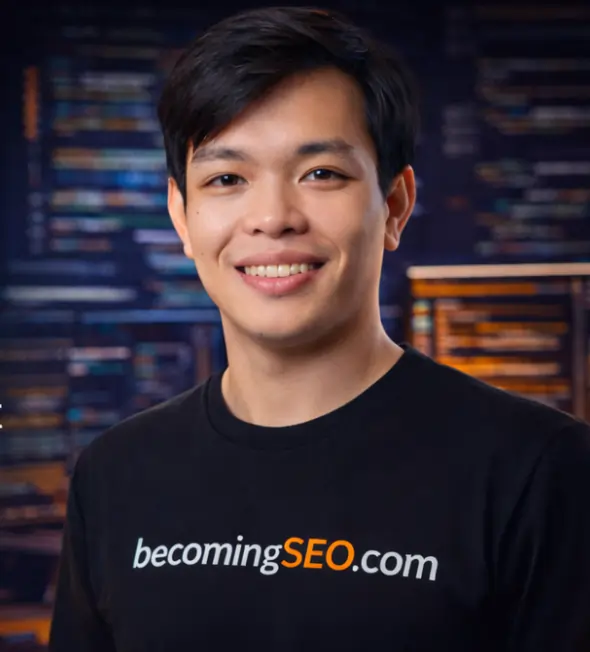
About BecomingSEO: We provide practical, beginner‑friendly SEO education. Founded by James Cee Diaz, with contributions from expert practitioners including Jin Grey, strategist behind SEO Mafia Club.

Jin Grey is a senior SEO consultant and the founder of SEO Mafia, with over 18 years of experience engineering search growth for global brands. A recognized specialist in high-stakes verticals like iGaming, she blends technical site architecture with AEO, GEO, and NLP-driven content to build resilient, conversion-focused systems.
Known affectionately as “Manang” to her inner circle, Jin is a digital nomad and mentor who leads a global collective of verified specialists, bridging the gap between deep technical execution and sustainable business growth.