Most people stumble into SEO through a random job, a YouTube rabbit hole, or a cheap course.
I didn’t. I Grew Up In SEO.
I grew up watching SEO feed my family.
When I was seven years old, my big sister, Jin Grey, was already deep into SEO and link building. While other kids were playing games, I was in the background watching her chase rankings, send outreach emails, and turn clicks into the income that paid our bills.

SEO wasn’t some abstract “digital marketing channel” in our house—it was the reason we could eat, study, and move forward.
By the time I understood what a “crawl path” or a “link profile” was, SEO had already been the backdrop of my entire childhood. It wasn’t a career path to me. It was survival, discipline, and proof that technical skills could change a family’s future.
If you want the short version of who I am, you can always jump to my About page—but this post is the full story.
From “Future Policeman” to Technical SEO Developer
My father wanted me to become a policeman. On paper, it sounded right: stable, respectable, predictable.

But I had already seen a different kind of stability.
While people around me talked about government exams, I was quietly helping with simple SEO tasks—blog comments, forum posting, basic link-building work. Back then, those tactics were mainstream, and yes, I was getting paid small amounts to help. I wasn’t a prodigy, but I was part of the machine.
When it was time to choose a course, I didn’t enroll in BS Criminology. I chose BSIT and committed to understanding the technical side of what I’d been exposed to for years.
By 2022, two years before I graduated in 2024, I was already working part-time as a Web Developer—deploying real sites, fixing real bugs, and seeing first-hand how development decisions affected SEO: page speed, structure, crawlability, indexation, and all the invisible details that either help or hurt rankings.
That mix of early exposure + formal IT education + real-world projects is why my work now sits at the intersection of development and SEO, not in one silo. If you want to see how that translates into client work, check out my Services page.
The Family Tech Stack: Strategy, Backend, Links, Content, and Growth
What started with one sister in SEO turned into a full-blown search and growth ecosystem inside our family.
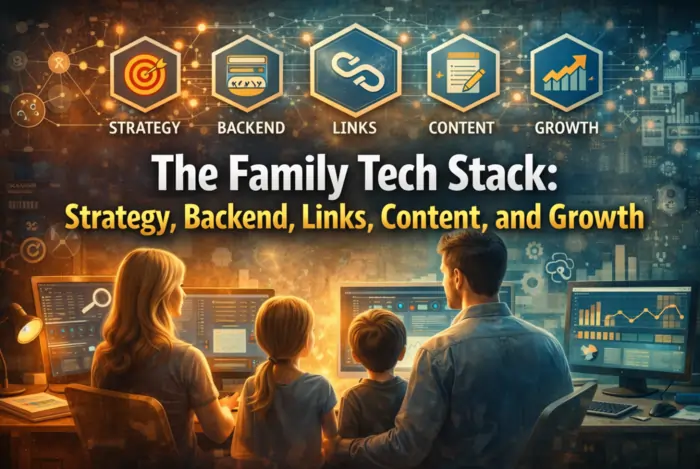
- Jin Grey (Sister)– SEO strategist and link-building veteran since 2008, working in high‑stakes niches and turning rankings into real revenue.
- Jovel Mark (Brother)– Full‑stack and backend developer who keeps complex systems stable, scalable, and efficient.
- JP and Dan (Brothers)– Both link builders, working on outreach, prospecting, and authority growth in competitive markets.
- Baby Ann (Sister in-law)– Owner of SocialBaddie.com, focused on social visibility and brand presence that supports search and content.
- Ivy & Rendalyn (Sisters in-law)– On‑page SEO and content specialists who align copy with search intent, structure, and E‑E‑A‑T signals.
- Kenn – Affiliate SEO marketer (Brother in law, Jin’s Husband) who lives in the world of offers, SERPs, and monetization.
- Jay Cris (Brother)– PPC specialist who runs paid campaigns that complement organic growth and accelerate testing.
And then there’s me: the Technical SEO Developer who turns strategies, ideas, and campaigns into code, architecture, and performance.
From Jin, I learned how search behaves in pressure environments like iGaming and affiliate SEO—exactly the kind of work I’ll be talking about under High‑Stakes SEO.
From Jovel, I learned why clean, efficient, maintainable code is the only way to scale without breaking things. From the rest of my family, I see every day how links, content, social, affiliate, and paid traffic fit together.
When you read content in Technical Excellence, Marketing Strategy, or The Lab, it’s not theory—it’s shaped by a family that touches every part of the search ecosystem.
Technically, I’ve Been Doing SEO Since I Was 7
Yes, was young but I was aware.
I’m not going to pretend I was doing full technical audits in grade school.
But I was doing real SEO work.
Back when blog commenting and forum posting were powerful link-building tactics, I was part of the process—following instructions, seeing what got approved, noticing what got deleted, and learning how platforms reacted.
It was simple work, but it taught me something that still drives everything I do today:
Small actions compound.
One better link. One faster page. One cleaner URL. One improved internal link. None of them look dramatic in isolation, but together, over months and years, they’re the difference between a site that struggles and a site that wins.
That’s the mindset behind how I think about on-page, off-page, and performance today—the same themes you’ll see broken down inside On‑Page SEO, Off‑Page SEO, and the Performance Lab.
Why I Build SEO‑First (Not “SEO‑After”)
Here’s how most businesses unintentionally sabotage themselves:
- They hire a developer to “build a nice website.”
- The site launches: it looks good, but it’s slow, poorly structured, and hard to crawl.
- They hire an SEO who delivers a 40‑page audit of issues.
- They pay another developer to patch things that should’ve been right from the start.
- Time and money get burned. Rankings barely move.
I’ve watched this pattern repeat too many times.
My approach is simple:
Code for the crawler. Design for the user.
That means:
- Thinking about site architecture before a single page is designed (you’ll see more of this in Site Architecture).
- Making Core Web Vitals part of the build, not a last‑minute panic item (see Performance Lab).
- Structuring URLs and internal links for both humans and search engines.
- Choosing stacks and plugins with performance, stability, and crawlability in mind.
When I build or optimize a site, I’m not just thinking “Will this look good?”
I’m asking:
- How will Googlebot move through this structure?
- How does this load on a real mobile connection, not just on fiber?
- What happens when this site grows from 20 pages to 2,000?
- Can this architecture support true topical authority in this niche?
That’s what SEO‑first development means to me. If you’re curious how that looks when you hire me, the breakdown is on Work With Me and Services.
What “Becoming SEO” Really Means
I named this site BecomingSEO for a reason.
For me, “becoming SEO” isn’t about slapping “SEO Expert” in a bio. It’s about becoming the kind of practitioner who:
- Understands how code, architecture, performance, content, and links all affect rankings.
- Treats SEO as a business growth lever, not a list of tricks.
- Knows how to operate in high‑stakes markets—iGaming, affiliate, finance—where mistakes are expensive.
- Keeps evolving with search: from classic blue links to AI overviews, semantic search, and AEO/GEO (which I’ll be exploring more in AEO & GEO and The Industry).
This site is for:
- Developers who are tired of hearing “this hurts SEO” without a real explanation.
- SEOs who are tired of waiting on dev teams that don’t understand why technical changes matter.
- Business owners who don’t want another shallow SEO blog—they want the thinking and the execution behind real results.
What You’ll See on This Blog
I’m not here to add more noise to the internet.
Here’s what you can expect from Insights on BecomingSEO:
- Technical SEO breakdowns
Real stories of fixing crawl issues, indexation problems, Core Web Vitals, and structural bottlenecks—down to how the code changed. A lot of this will live in Technical Excellence. - Architecture & build diaries
How I plan and build SEO‑first sites: URL structures, internal linking, navigation, and content hierarchies before design. You’ll see these ideas reflected in Site Architecture. - High‑stakes SEO lessons
What actually works in iGaming, affiliate, and other demanding niches—shared under High‑Stakes SEO. - Marketing strategy thinking
How on‑page, off‑page, local, paid, and digital marketing fit together as a cohesive growth engine, not isolated channels. That’s what Marketing Strategy and Digital Marketing are for. - Personal and nomad journals
Reflections on work, remote life, and building a career at this intersection, which you’ll find in Journal, Personal Stories, and Nomad Workflows.
If you want generic “SEO basics,” there are thousands of places to get that. If you want to see how SEO, development, family legacy, and real business context connect—this is what I’m building here.
Who This Is For (And Who It’s Not)
This blog is for you if:
- You want clear explanations without corporate buzzwords.
- You don’t mind technical topics—as long as they’re explained like a human.
- You care about long‑term, defensible SEO rather than quick hacks.
- You like seeing how things are done, not just listicles telling you what to do.
This blog is not for you if:
- You’re looking for “rank in 30 days” tricks.
- You want shortcuts that ignore risk and long‑term impact.
- You hate technical details and only want surface‑level tips.
If you’re still reading, you’re probably in the right place.
Why I Built BecomingSEO
I built BecomingSEO to combine three things:
- A family legacy in SEO and development – strategy from Jin, backend depth from Jovel, link building from JP and Dan, content and on‑page from Ivy and Rendalyn, social from Baby Ann, affiliate focus from Kenn, and paid growth from Jay Cris.
- My experience since 2022 as a Web Developer and Technical SEO – seeing what breaks, what scales, and what quietly kills performance.
- A real gap in the industry – too many SEOs who can’t implement, too many developers who don’t understand search, and very few people comfortable in both worlds.
My goal is simple:
To help more people build and fix websites the right way—so they can rank, convert, and last.
If you want to go deeper into my background, you can always visit the About page.
Where We Go From Here
If you see yourself in any part of this story, here’s what you can do next:
- Explore Technical Excellence to dive into the technical side—Core Web Vitals, crawlability, architecture, performance.
- Browse Marketing Strategy to connect technical execution with rankings, traffic, and revenue.
- Check The Lab for tools, workflows, and systems that support how I actually work.
- Read The Industry for bigger-picture trends, high‑stakes SEO, and specialist perspectives.
If you’re a practitioner with your own hard‑earned lessons and want to share them, you’re exactly the kind of person I want on this platform. Start with Write for Us and send a pitch.
And if you’re not here to just read—but to fix or build something—you can reach out through Work With Me or Contact and tell me what you’re trying to achieve.
This is just the first post.
From here, we’ll get into the audits, builds, migrations, speed wins, high‑stakes experiments, and hard lessons that shaped how I work today.
Welcome to BecomingSEO.

James Cee Diaz | Web Dev Technical SEO & Search Strategist
Most SEOs find problems they can’t fix; most developers build sites that can’t rank. I bridge that gap. I engineer search-ready infrastructure for high-stakes iGaming and affiliate markets—ensuring your architecture is optimized to win before the first word of content is even written.