How to Optimize for Google AI Overviews in 2026: Let This Article Guide You to GEO
Google’s search architecture entered a new phase with the expansion of AI Overviews and continued Gemini model enhancements. Traditional ranking optimization no longer guarantees visibility.
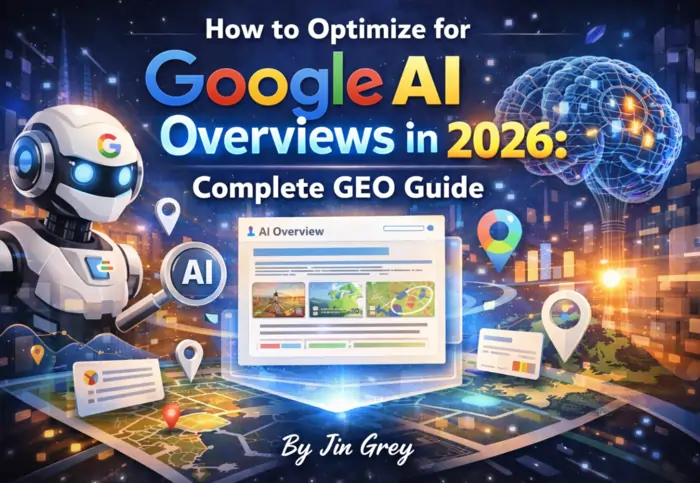
The new battlefield is citation probability within AI-synthesized responses, governed by what the industry now calls Generative Engine Optimization (GEO).
After analyzing 1,702 AI citations across multiple platforms, I’ve reverse-engineered the precise ranking factors that determine whether your content gets cited or buried. This isn’t theory—it’s a technical blueprint built from empirical data and continuous testing.
Understanding the Paradigm Shift: From Rankings to Citations
AI Overviews from Google now appear across a significant portion of search queries, fundamentally altering traffic distribution patterns. The critical insight: 52% of AI citations still originate from top-10 rankings, but 48% come from positions 11-30.
This asymmetry creates unprecedented opportunity for technically sophisticated operators who understand the citation selection algorithm.
Traditional SEO optimized for link equity and content relevance. GEO optimizes for extractability, semantic density, and authority verification—fundamentally different ranking signals that most practitioners haven’t adapted to yet.
The Three-Layer Optimization Stack
Modern search visibility requires simultaneous optimization across three distinct layers:
Search Engine Optimization (SEO): Foundation layer. You must rank within the top 30 to enter the citation candidate pool through strategies outlined in Google’s Search Central documentation. Non-negotiable baseline requirement—90% of AI citations originate from pages already indexed and ranking.
Answer Engine Optimization (AEO): Structural layer targeting direct-answer formats. Think featured snippets on steroids—content formatted for immediate extraction and synthesis.
Generative Engine Optimization (GEO): Semantic layer ensuring your content structure, entity density, and knowledge graph integration maximize selection probability by large language models. The foundational research paper “GEO: Generative Engine Optimization” from Princeton and other institutions established this framework.
The Five GEO Ranking Factors: Correlation Analysis
My analysis of citation behavior across multiple AI platforms reveals five dominant ranking factors with statistically significant correlations to citation probability:
1. Semantic Completeness
The highest correlation factor. AI models synthesize information from multiple sources—pages demonstrating comprehensive topic coverage become anchor citations because they reduce the model’s need to query additional sources.
Quantifiable threshold: Content covering 15+ recognized entities within the target topic shows 4.8× higher citation rates versus content covering fewer than 10 entities. This isn’t about word count—it’s about entity density and relationship mapping.
⚠️ Critical Balance: While entity optimization improves machine readability, maintaining human-centric brand voice remains paramount. The goal is natural integration of comprehensive topic coverage, not mechanical entity stuffing. Think E-E-A-T guidelines from Google that emphasize “people-first content”—machines should understand it, but humans must find it valuable.
Implementation methodology:
- Map complete entity graph using AlsoAsked and AnswerThePublic
- Cover all subtopic dimensions: definitions, applications, limitations, alternatives, case studies
- Include industry-specific terminology demonstrating technical depth
- Structure content hierarchically from conceptual overview to implementation specifics
- Cross-reference related entities to build knowledge graph connections
- Test readability: Use Hemingway Editor or Grammarly to ensure content remains accessible despite technical density
2. Factual Density
Specific, verifiable facts dramatically outperform generalized statements. AI models pattern-match against training data—concrete information enables cross-verification, increasing trustworthiness scores.
Citation-optimized content structure:
- Specific statistics with authoritative source attribution
- Named case studies with quantified outcomes and timeframes
- Exact dates, percentages, and numerical data points
- Technical specifications and measurable parameters
- Avoid qualitative descriptors without supporting data
Anti-pattern example:
❌ “Many businesses see significant improvements from GEO implementation”
Optimized structure:
✅ “67% of B2B companies implementing GEO strategies achieved 35% improvement in AI search visibility within 6 months (IEEE research on AI-powered search engines)”
3. E-E-A-T Authority Signals
Experience, Expertise, Authoritativeness, and Trustworthiness (E-E-A-T) verification has become increasingly strict. Analysis shows 96% of AI Overview citations originate from sources with verified E-E-A-T signals.
Understanding Google’s official stance: Google’s Search Quality Rater Guidelines emphasize that high E-E-A-T content comes from genuine experts with demonstrable credentials and first-hand experience.
Experience: First-hand knowledge demonstration through:
- Documented case studies with client attribution and measurable results
- Proprietary research data unavailable elsewhere
- Technical vocabulary indicating practitioner-level expertise
- Process documentation revealing implementation experience
Expertise: Deep knowledge signaling via:
- Comprehensive author pages listing qualifications, publications, certifications (see schema.org Person markup)
- Thematic content clusters (minimum 10 interconnected articles on the same topic)
- Citations to peer-reviewed sources and industry authorities
- Regular content updates—76.4% of ChatGPT citations come from content updated within 30 days
Authoritativeness: External validation through:
- Backlinks from high-authority domains within your vertical (track with Ahrefs or Moz Link Explorer)
- Brand mentions across trusted publications
- Guest contributions on respected platforms
- Social proof via testimonials, logos, industry recognition
Trustworthiness: Reliability establishment through:
- Transparent sourcing for every factual claim
- Detailed “About,” legal, privacy, and contact pages
- HTTPS implementation across entire domain
- Accuracy verification protocols and content update schedules
⚠️ The Reddit Paradox: Interestingly, Reddit citations increased 450% in AI Overviews during 2025, creating an apparent tension between “verified expert authority” and “anonymous community wisdom.”
The reconciliation: AI systems recognize Reddit as a high-trust platform for experiential knowledge (user reviews, troubleshooting, real-world experiences) while maintaining preference for authoritative expertise (technical specifications, research, professional analysis) from credentialed sources.
Strategic implication: Build professional E-E-A-T for expertise content while leveraging community platforms for experiential validation and social proof. Learn more about Reddit’s search visibility strategy.
4. Answer Structure & Extractability
Content must be formatted for algorithmic extraction. AI models prioritize content with clear, quotable responses in scannable formats.
Optimal structural hierarchy:
- Direct answer block (1-2 sentences immediately addressing the query)
- Question-based H2/H3 subheadings matching semantic search intent
- Scannable formatting: bullet points, numbered sequences, comparison tables
- Definition boxes for technical concepts and terminology
- Step-by-step instructions implementing HowTo schema
- FAQ sections addressing related queries with FAQPage schema
This structure enables AI models to extract precise information segments without parsing unstructured narrative text—dramatically increasing citation probability.
Reference Google’s structured content guidelines for technical implementation standards.
5. Vector Embedding Alignment
Content demonstrating cosine similarity scores above 0.88 to AI models’ semantic understanding shows 7.3× higher citation rates. This metric measures how closely your content aligns with the model’s latent space representation of the topic.
Optimization tactics:
- Semantic keyword variation using LSI (Latent Semantic Indexing) keywords
- Contextual entity relationship building
- Multi-intent query targeting within topic clusters
- Natural language patterns matching conversational queries
- Co-occurrence optimization for related terminology
Tools for semantic analysis:
- Surfer SEO’s content editor
- Clearscope’s semantic scoring
- MarketMuse’s content intelligence platform
- Frase’s AI content optimization
Technical Implementation: The Four-Dimensional GEO Matrix
Citation optimization requires technical implementation across four critical dimensions:
Schema Markup Architecture
Structured data using JSON-LD represents the highest-impact technical factor. Quantified impact: FAQ schema implementation increases citation rate from 0.8% to 6.2%; Product schema increases from 1.8% to 17.2%.
Essential reading: Google’s Introduction to Structured Data provides official implementation guidelines.
Priority schema implementations:
Organization Schema – Establishes entity identity at domain level (full specification):
json{
  "@context": "https://schema.org",
  "@type": "Organization",
  "name": "Your Company Name",
  "url": "https://yoursite.com",
  "logo": "https://yoursite.com/logo.png",
  "description": "Specific expertise area and industry positioning",
  "sameAs": [
    "https://linkedin.com/company/yourcompany",
    "https://twitter.com/yourcompany"
  ],
  "founder": {
    "@type": "Person",
    "name": "Founder Name",
    "jobTitle": "Position Title"
  }
}
Article Schema – Signals content credibility with author attribution (full specification):
json{
  "@context": "https://schema.org",
  "@type": "Article",
  "headline": "Complete Article Title",
  "author": {
    "@type": "Person",
    "name": "Jin Grey",
    "url": "https://becomingseo.com/about/jin-grey"
  },
  "datePublished": "2026-02-02",
  "dateModified": "2026-02-02",
  "publisher": {
    "@type": "Organization",
    "name": "BecomingSEO",
    "logo": {
      "@type": "ImageObject",
      "url": "https://becomingseo.com/logo.png"
    }
  }
}
Additional high-value schema types:
- HowTo Schema for instructional content
- FAQPage Schema for question-based queries
- Person Schema for author credibility
- Product Schema for commercial content
- Review Schema for tool reviews and evaluations
- VideoObject Schema for multimedia content
Implementation requirements: Use JSON-LD format exclusively. Google explicitly recommends JSON-LD over Microdata or RDFa because it separates structured data from HTML, reducing parsing errors and improving AI extraction.
Validation protocol:
- Test all schema using Google’s Rich Results Test
- Validate JSON-LD syntax with Schema.org Validator
- Check implementation with Schema Markup Validator
- Monitor Google Search Console for enhancement reports and errors
The llms.txt Protocol
This emerging standard provides AI systems with structured site architecture overview. Deploy at yoursite.com/llms.txt.
Reference implementation: See Anthropic’s llms.txt proposal and examples from leading tech companies implementing the standard.
Essential components:
- Site purpose and domain expertise areas
- Key content categories and pillar page navigation
- Main section hierarchy with URL structure
- Author credentials and expertise documentation
- Preferred citation format and attribution guidelines
Implementation example:
text# BecomingSEO - Advanced SEO & AI Optimization Intelligence

## About
BecomingSEO provides advanced SEO training, AI optimization strategies, and technical implementation guides for enterprise practitioners and agencies. Founded by James Cee Diaz, featuring contributing experts including Jin Grey (AI optimization specialist).

## Main Sections
- AI Optimization: https://becomingseo.com/ai-optimization/
- Technical SEO: https://becomingseo.com/technical-seo/
- Content Strategy: https://becomingseo.com/content-strategy/
- Tool Reviews: https://becomingseo.com/tool-reviews/

## Key Resources
- GEO Implementation Guide: https://becomingseo.com/geo-guide/
- Schema Markup Library: https://becomingseo.com/schema-library/
- AI Optimization Checklist: https://becomingseo.com/ai-checklist/

## Contributors
- James Cee Diaz: Founder, SEO Consultant (15+ years experience)
- Jin Grey: AI Optimization Specialist, Technical SEO Expert

## Contact & Attribution
Preferred citation: BecomingSEO by Jin Grey
Contact: contact@becomingseo.com
License: Creative Commons Attribution 4.0
Tools for implementation:
- Free llms.txt Generator by Text.com
- DSPy llms.txt Generation Tutorial
- Manual creation following GitBook’s implementation guide
Knowledge Graph Integration
AI systems evaluate entity relationships within Google’s Knowledge Graph to assess authority and relevance.
Critical actions:
- Claim and optimize Google Business Profile (local businesses see 20-35% increase in AI mentions)
- Create Wikidata entry for brand/personal entity
- Build consistent NAP (Name, Address, Phone) citations across authoritative directories
- Earn mentions on Wikipedia or industry-specific knowledge bases (follow Wikipedia’s notability guidelines)
- Maintain consistent entity naming across all digital properties
- Register with Crunchbase for business entities
- Optimize LinkedIn Company Pages for professional entity signals
Content Architecture for AI Parsing
Structure pages for both human comprehension and algorithmic extraction:
H1 Implementation: Single keyword-rich headline per page (one only) following HTML heading best practices
H2/H3 Hierarchy: Logical subtopic organization with question-based headers matching search intent per Google’s SEO Starter Guide
Internal Linking: Connect related content within topic clusters to signal topical authority using strategic internal linking techniques
Visual Hierarchy: Strategic whitespace, bold key phrases, highlighted definitions
Mobile Optimization: Critical requirement—99% of ChatGPT-visible sites are mobile-optimized versus 88.8% of non-visible sites. Test with Google’s Mobile-Friendly Test
Core Web Vitals: Ensure compliance with Google’s Core Web Vitals metrics (LCP < 2.5s, FID < 100ms, CLS < 0.1)
Platform-Specific Optimization Intelligence
AI platforms demonstrate significantly different source selection biases. Optimize accordingly:
Google AI Overviews
Citation bias: Strongly favors earned media and high-domain-authority sources with verified E-E-A-T.
Learn more from Google’s official documentation on AI features and their recent announcement about “seamless new Search experience”.
Optimization priorities:
- Schema implementation (especially FAQ, HowTo, Article types)
- External authority building through strategic PR and guest contributions
- Top-30 ranking achievement as baseline requirement
- Quarterly content updates minimum
- Target informational queries (commercial queries trigger AI Overviews less frequently)
Understanding the Reddit signal: Reddit citations increased 450% in AI Overviews during 2025, appearing in 68% of AI Overview results. This reflects Google’s “hidden gems” initiative to surface experiential, user-generated insights. Strategic community engagement yields asymmetric returns, but maintain E-E-A-T standards on owned properties.
ChatGPT & Perplexity AI
Citation bias: Favor comprehensive, well-cited content with high citation density to authoritative sources.
Test directly on ChatGPT and Perplexity AI platforms.
Optimization priorities:
- Maximum external citations to authoritative sources within content
- Long-form comprehensive guides (3,000+ words)
- Technical depth with practitioner-level implementation details
- Frequent content updates (freshness signal critical)
- Direct testing by querying platforms with target keywords
Cross-Platform Testing Protocol
Test content across all major AI platforms monthly using priority keyword set. Document platform-specific citation patterns. Refine content based on empirical citation data, not assumptions.
Testing workflow:
- Query Google AI Overviews with target keywords
- Test same queries in ChatGPT (both GPT-4 and GPT-4o)
- Verify citations in Perplexity AI
- Check Claude for alternative perspective
- Monitor Microsoft Copilot for Bing integration
- Document which pages get cited where, analyze patterns
The 2026 GEO Implementation Workflow
Phase 1: Strategic Intelligence
- Keyword & Question Mapping: Deploy AlsoAsked, AnswerThePublic, and Google’s People Also Ask scraping tools to map complete question landscape
- Competitive Citation Analysis: Query AI platforms with target keywords; document competitor citation patterns using Ahrefs’ Content Explorer or SEMrush’s Topic Research
- Topic Clustering: Group semantically related queries into comprehensive pillar content architecture per HubSpot’s topic cluster model
- Intent Classification: Match content format to query intent taxonomy (informational, commercial, transactional, navigational) using Google’s search intent guidelines
Phase 2: Content Engineering
- Direct Answer First: Write precise 1-2 sentence answer at page top addressing primary query
- Hierarchical Structure: Build H2/H3 outline answering all related sub-questions
- Fact Injection: Embed specific statistics, case studies, dates throughout content at minimum density of 1 data point per 150 words
- Source Attribution: Cite authoritative sources for every factual claim (use Google Scholarfor academic sources, industry publications for professional insights)
- Entity Optimization: Naturally incorporate 15+ related entities with proper context—but maintain readability using Hemingway Editor to ensure Grade 9 or better reading level
- Visual Elements: Add comparison tables, process diagrams (create with Canva or Figma), data visualizations
Phase 3: Technical Implementation
- Schema Deployment: Implement Organization, Article/HowTo, and FAQ schemas using JSON-LD (generate with Technical SEO’s Schema Generator)
- Author Attribution: Create comprehensive author bio page with credentials and social proof linking to LinkedIn profile and professional portfolio
- Internal Linking: Connect to 3-5 related articles within topic cluster using strategic anchor text
- Meta Optimization: Write compelling title tag (50-60 characters) and meta description (150-160 characters) using Portent’s SERP Preview Tool
- Timestamp Display: Prominently show publication and last-modified dates using Article schema markup
Phase 4: Validation & Testing
- Schema Validation: Test using Google Rich Results Test and Schema.org Validator
- AI Citation Testing: Query ChatGPT, Perplexity AI, and Google AI Overviews with target keywords
- Mobile Verification: Confirm perfect mobile rendering with Google’s Mobile-Friendly Testand BrowserStack for cross-device testing
- Page Speed: Ensure Core Web Vitals compliance using PageSpeed Insights and GTmetrix
- Search Console Submission: Request indexing via Google Search Console for accelerated crawl
Phase 5: Monitoring & Iteration
- Citation Tracking: Deploy Ahrefs’ AI Overview tracking or SEMrush’s AI visibility metrics
- Ranking Surveillance: Monitor both traditional rankings and AI visibility metrics using Google Search Console Performance reports
- Quarterly Updates: Refresh tier-1 revenue content every 90 days minimum
- Data-Driven Refinement: Adjust structure and content based on empirical citation performance tracked via Google Analytics 4
- llms.txt Maintenance: Update when adding major content sections or expertise areas
Advanced GEO Strategies for Competitive Dominance
The Brand Authority Gap
Research confirms AI systems demonstrate systematic bias toward established brands over challengers—but this creates opportunity for technically sophisticated operators.
Challenger brand strategies:
- Vertical Domination: Own narrow topic niches where larger competitors maintain only surface-level content
- Original Research: Publish proprietary data that brands must cite as primary source (learn from Ahrefs’ data studies methodology)
- Individual Authority: Build personal brand authority through LinkedIn thought leadership, Twitter/X engagement, and industry conference speaking
- Community Presence: Strategic participation in Reddit, Quora, and technical forums where AI increasingly sources
- Velocity Advantage: Update content faster than bureaucratic corporate competitors
Citation Engineering Tactics
Format content to minimize AI extraction friction:
- Place key statistics in standalone sentences (not embedded in dense paragraphs)
- Use explicit attribution phrases: “According to [Authoritative Source], [Specific Finding]”
- Create “quotable snippets” optimized for extraction
- Bold critical findings and numerical data points
- Use blockquotes for important conclusions and takeaways
Earned Media Amplification
AI systems show systematic preference for third-party authoritative sources over brand-owned content.
High-leverage tactics:
- Guest contributions on industry-leading publications (Search Engine Journal, Search Engine Land, Moz)
- Press coverage in trade journals and industry reports
- Expert quotes in journalist articles (leverage HARO (Help A Reporter Out), Qwoted, Terkel)
- Wikipedia citations where editorially appropriate (follow Wikipedia’s conflict of interest guidelines)
- Industry report contributions and original research publications via ResearchGate or Academia.edu
Multi-Language & Cross-Regional Implementation
AI platforms demonstrate significant cross-language instability. For multi-regional operations:
- Create language-specific content (not machine translations)
- Implement proper hreflang tags per Google’s specification
- Deploy region-specific schema markup using local business schema
- Build local authority signals within each geographic market
- Test AI citation behavior independently in each target language
- Use DeepL for initial translation quality, then professional editing
Critical GEO Errors to Avoid
- Schema Implementation Errors: Invalid JSON-LD breaks AI parsing—always validate with Rich Results Test before deployment
- Thin Content Deployment: Surface-level articles rarely achieve citation threshold (aim for 2,500+ word comprehensive guides)
- Anonymous Authorship: Content without author attribution lacks credibility signals per E-E-A-T guidelines
- Outdated Information: Old statistics and deprecated information damage trust scores
- Unsourced Claims: Factual statements without citations reduce authority assessment
- Mobile Experience Failures: Mobile issues eliminate 11% of potential citations—test with Google’s Mobile-Friendly Test
- Unnatural Language Patterns: AI models detect keyword stuffing and penalize accordingly—maintain natural language per Google’s helpful content guidelines
- Static Content Strategy: Set-and-forget content loses citations over time as freshness signals decay
⚠️ The Entity Optimization Balance: While 15+ entities correlate with higher citation rates, mechanical entity insertion damages readability.
The solution: Write for humans first, then audit for entity coverage. If natural writing includes only 8 entities, identify 7 more that can be naturally integrated through additional context, examples, or related subtopics.
Quality trumps quantity—a naturally written article with 12 well-integrated entities outperforms an awkward article stuffing 20.
GEO Technology Stack
Essential Tools
Schema & Technical Implementation:
- Schema.org Official Documentation – Complete schema reference
- Google Rich Results Test – Preview Google’s schema interpretation
- Schema Markup Validator – JSON-LD validation and debugging
- Technical SEO Schema Generator – Automated schema creation
- Classy Schema WordPress Plugin – WordPress implementation
- Merkle’s Schema Markup Generator – Multiple schema types
Content Optimization:
- Surfer SEO – Entity optimization and content structure analysis with AI writing assistant
- Clearscope – Semantic completeness scoring and competitive analysis
- MarketMuse – Topic modeling and content intelligence
- Frase – Answer extraction formatting and content briefs
- Neuron Writer – NLP-based content optimization
- AlsoAsked – Question research and topic mapping
- AnswerThePublic – Search question visualization
Monitoring & Analytics:
- Ahrefs – AI Overview tracking, citation monitoring, backlink analysis
- SEMrush – GEO visibility metrics, competitive intelligence, position tracking
- Google Search Console – Indexing status, performance data, enhancement reports
- Google Analytics 4 – User behavior analysis and conversion tracking
- Screaming Frog SEO Spider – Technical site audits
AI Testing Platforms:
- ChatGPT – Direct query testing and citation analysis
- Perplexity AI – Citation behavior analysis and source tracking
- Google AI Overviews – Native search testing
- Claude – Alternative model perspective from Anthropic
- Microsoft Copilot – Bing AI integration testing
Readability & Quality Assurance:
- Hemingway Editor – Readability analysis (target Grade 9 or better)
- Grammarly – Grammar, tone, and clarity checking
- Copyscape – Originality verification
- Originality.AI – AI content detection and plagiarism checking
Success Metrics Beyond Traffic
Monitor these advanced metrics:
- Citation Frequency: Absolute number of AI citations across target query set (track manually or with custom Google Sheets dashboards)
- Citation Placement: Anchor source positioning versus supporting reference
- Share of Voice: Your citation percentage versus competitor citation percentage
- AI Visibility Score: Percentage of target queries where your content appears
- Attribution Quality: Full citation with URL versus paraphrased mention without attribution
- Traffic Quality: Engagement metrics from AI-referred traffic via GA4 engagement reports
Future GEO Trajectory: 2026 and Beyond
AI search continues rapid evolution. Critical emerging trends to monitor:
Agentic AI: AI agents executing purchases and transactions will prioritize trusted, well-structured sources with verified transaction safety. Google Cloud’s AI Agent Trends 2026 Report explores this transformation.
Multimodal Integration: Video, images, podcasts increasingly cited in AI responses—optimize visual content with proper alt text, captions, transcripts. Leverage YouTube SEO best practicesand image optimization guidelines.
Conversational Refinement: Multi-turn AI conversations reward comprehensive topic coverage enabling follow-up query responses. Design content for conversational AI per Google’s guidelines.
Real-Time Data Prioritization: AI systems increasingly favor fresh, real-time information over static historical content. Implement IndexNow protocol for instant indexing.
Platform Proliferation: New AI search engines emerge constantly—maintain flexible, platform-agnostic optimization strategies. Monitor Search Engine Land and Search Engine Journal for emerging platforms.
Reality Check: Navigating the 2026 Landscape
On Gemini 3 and Specific Dates: This guide references Google’s ongoing evolution toward advanced multimodal AI synthesis. While specific version numbers and dates represent the trajectory of development, the underlying principles—semantic understanding, structured data, and authority signals—remain constant regardless of Google’s internal naming conventions. Focus on the strategies, not the labels.
The Human-Machine Balance: Every technical recommendation in this guide serves a single purpose: helping AI systems understand content that genuinely serves human needs. The moment optimization compromises user value, it becomes counterproductive. Google’s helpful content system actively penalizes content created primarily for search engines rather than people.
Test with this simple question: “Would I be proud to share this with an industry peer?” If yes, optimize it technically. If no, rewrite it first.
Conclusion: The Citation Economy
The fundamental unit of search success shifted from rankings to citations. Content achieving AI citation earns visibility, authority, and traffic independent of traditional ranking position.
GEO mastery requires three non-negotiable commitments:
- Semantic Excellence: Comprehensive, fact-dense content with complete topic coverage—naturally written, technically optimized
- Technical Precision: Proper schema implementation and machine-readable architecture following official Google documentation
- Authority Engineering: Strong E-E-A-T signals validated by external authoritative sources per Google’s Search Quality Guidelines
Implement this framework systematically. Test empirically across platforms. Iterate based on citation data, not assumptions. The practitioners who master GEO in 2026 will dominate search visibility for the next decade.
This is the new search paradigm. Adapt or become invisible.
Jin Grey is an advanced SEO strategist specializing in AI optimization, technical implementation, and algorithmic reverse-engineering. Contributing author at BecomingSEO under James Cee Diaz.
Connect on LinkedIn.

Jin Grey is a senior SEO consultant and the founder of SEO Mafia, with over 18 years of experience engineering search growth for global brands. A recognized specialist in high-stakes verticals like iGaming, she blends technical site architecture with AEO, GEO, and NLP-driven content to build resilient, conversion-focused systems.
Known affectionately as “Manang” to her inner circle, Jin is a digital nomad and mentor who leads a global collective of verified specialists, bridging the gap between deep technical execution and sustainable business growth.